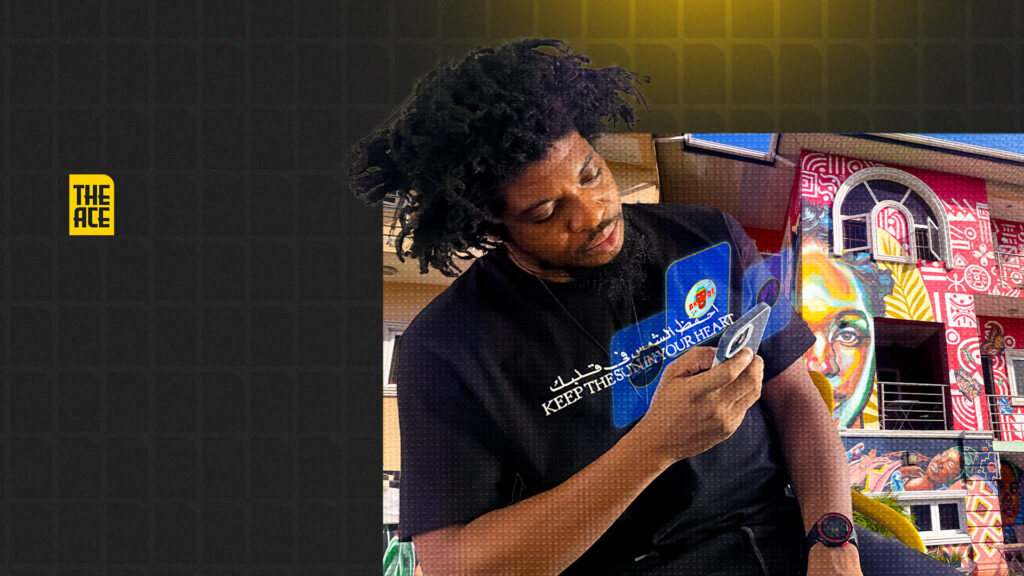
From building a physical hub to rethinking scale, platforms, and production, he’s betting on a new model and making a case for imperfection in Africa’s creative industries.
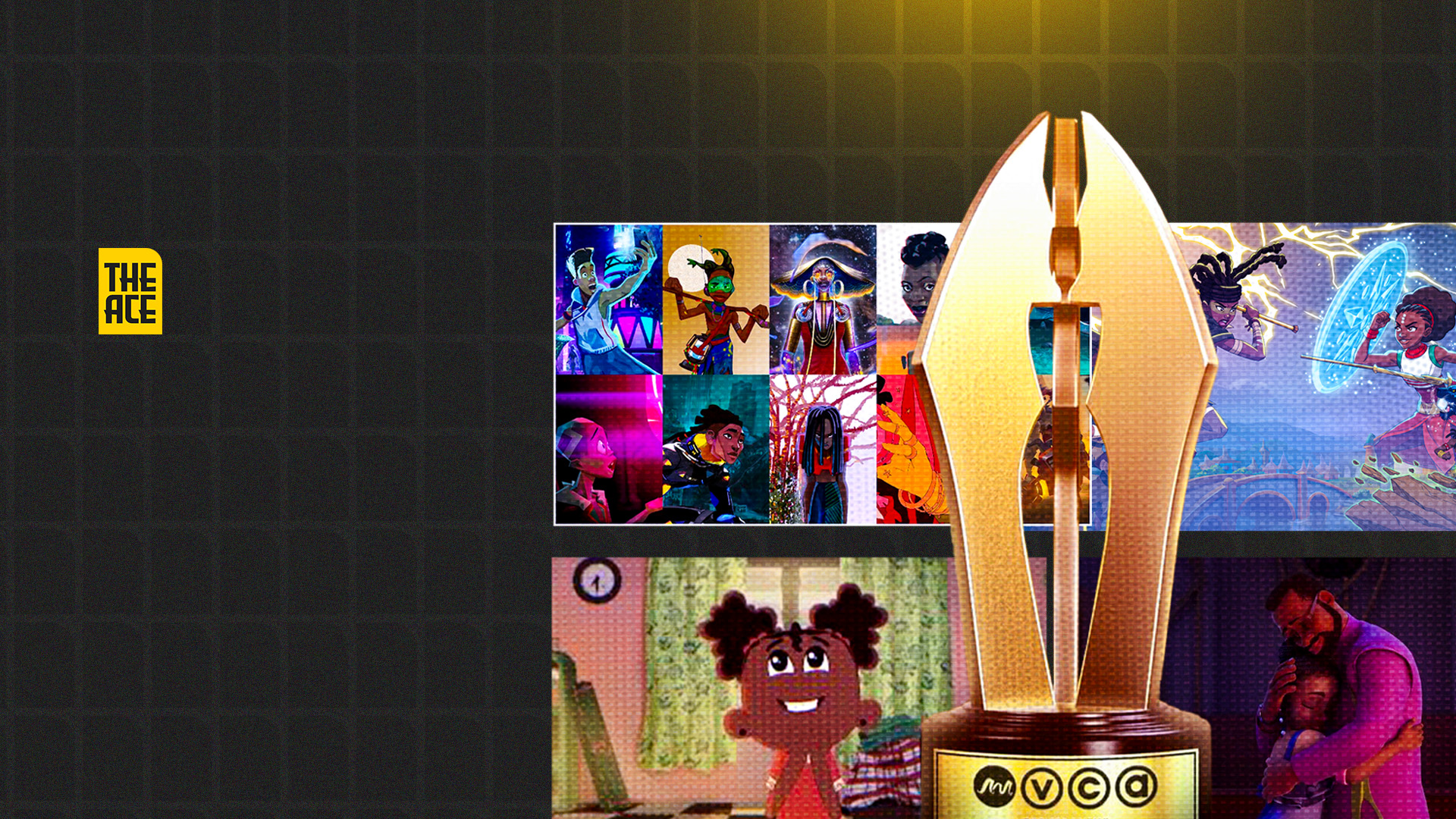
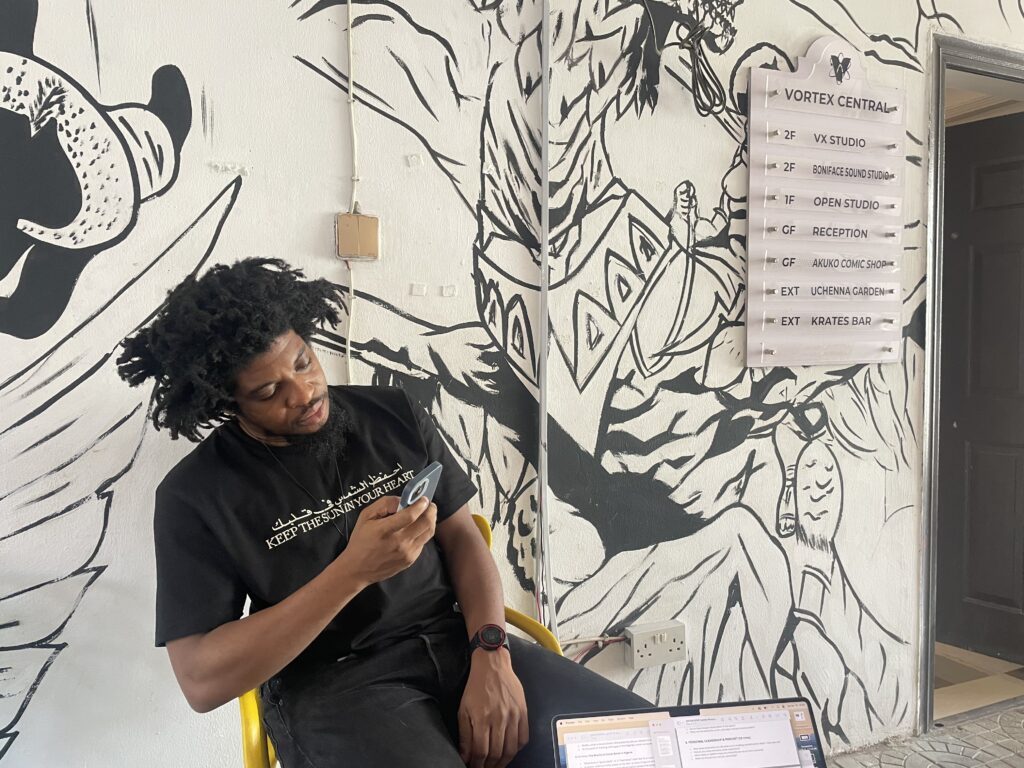
The space does not immediately read like something that is ending. There are still comics on the walls, panels stretching across surfaces, characters frozen mid-action. The furniture is intact, the structure holds, and at a glance, it looks like what it has always been: a place designed for people to gather, linger, and build around a shared obsession with stories. For the past three years, that is exactly what the building holding Krates bar and restaurant, Akuko Comic Book Shop, Open Studio Africa, and the VX animation studio has been. A creative hub within Lagos’ growing digital art ecosystem, hosting events, conversations, cosplay parties, and something closer to a daily Comic Con than a once-a-year spectacle. It functioned as an experiment in proximity, an attempt to answer a simple question: what happens when you give a scattered creative community a physical centre?
Now, it is shutting down. Not because the idea failed, and not because people did not show up, but because after three years of building, it became clear that what the space revealed was more important than what it sustained. For Somto Ajuluchukwu, founder of the unbrella brand Vortex Central, the decision is less about closing a chapter than it is about correcting a model. “We’re not shutting down because it didn’t work,” he says in the interview. “We’re shutting down because we’ve seen what works, and what doesn’t.”
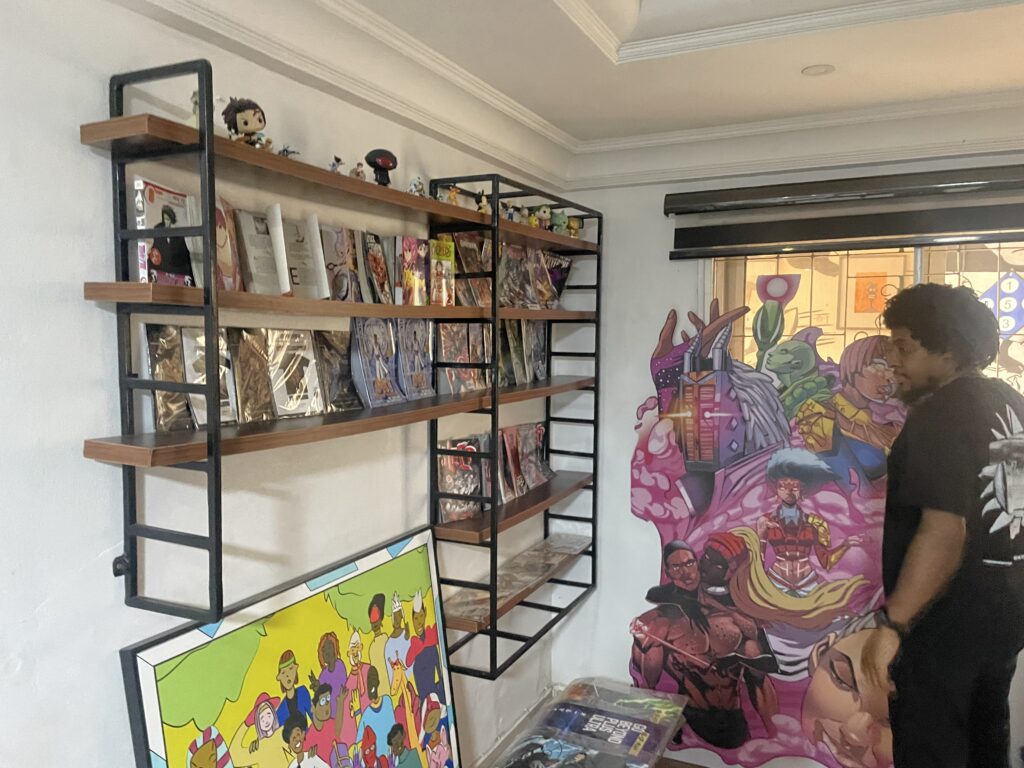
The assumption had been straightforward: if you build a space for a growing creative community, the ecosystem will begin to organise itself around it. In practice, the outcome was more complicated. People came, the energy was real, and the culture was present. But, as Somto puts it plainly, “community alone is not a market.”
What the space made visible over time was not a lack of interest, but a gap between presence and participation. The hub existed, but not necessarily within the natural flow of its audience’s daily movement. “People will come,” he explains, “but you don’t want a system that depends on people deciding to come. You want a system that sits where they already are.” It was clear that people visited, but those visits required intention, and in most consumer systems, intention introduces friction. That friction reveals itself gradually with fewer walk-ins, shorter stays, and inconsistent conversion.
The decision to shut down the Island location is, thus, strategic. Somto reveals that the hub will pivot to the mainland, targeting Ikeja, Magodo, or Yaba, to embed the brand within the natural daily flow of its core audience. ‘Having a hub here on the Island… is doing what Comic-Con is doing,’ he notes, referring to the ‘once-a-year’ spectacle that fails to build daily consumer habits
The conversation continued about the episodic nature of events. They create peaks of engagement, but not continuity. Community forms within those peaks, but it does not automatically translate into transactions. Even the bookstore, which is an extension that deepened the authenticity of the space, operated more as a curated experience than a consistent retail engine. “People come in, they browse, they take pictures,” he says. “But that doesn’t mean they’re buying at the level you need.”
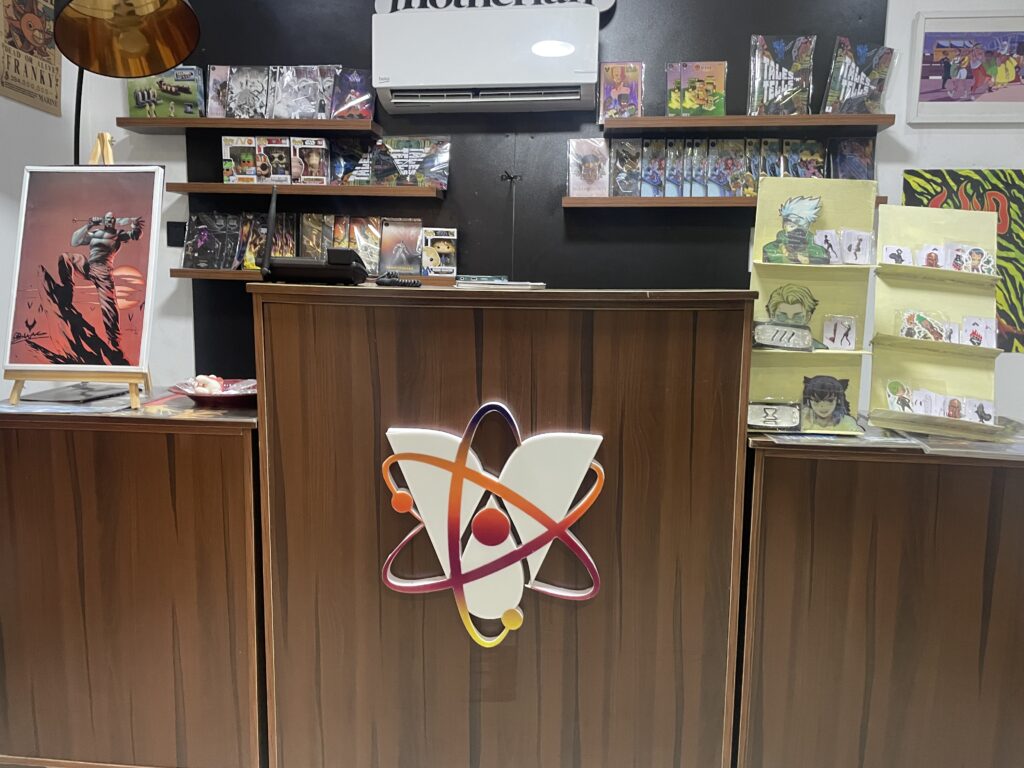
The data from the hub’s three-year run provided a clear reality check: while the space hosted culturally significant events, the conversion to retail was a struggle against entrenched consumer behaviour. Despite this, the experiment proved there is a niche for physical retail because the hub generated millions in revenue from print sales alone. The clearer understanding is that the space could gather people, but it could not convert into a functioning market.
Across Nigeria’s comic and animation ecosystem, that pattern repeats: people show up, engage, and participate culturally, but do not consistently support the economic layer required to sustain the work. Ergo, attendance becomes mistaken for traction, and visibility becomes confused with growth. “You can have a full room,” Somto observes, “and still not have a business.” The result is an ecosystem that appears active, but struggles to scale.
This illusion is reinforced by the way success is often measured. Sustainability is largely driven by external validation like grants, partnerships, and international recognition. While these forms of support are significant, they cannot replace a self-sustaining economic system. For Somto, the goal is to shift from the perception of success to the hard data of consumer patronage.
At the same time, creators often hold tightly to intellectual property, treating ownership as the primary form of leverage. In principle, this is valid. In practice, it collides with a more immediate constraint. “Everybody wants to own their IP,” Somto says, “but not everybody has the capacity to execute it.” Ownership, in isolation, does not create value. Without distribution, marketing, and consistent production, even the strongest ideas struggle to reach an audience at scale.
Beneath all of this is a more fundamental constraint: output. “We don’t produce enough,” he states. The industry is not only under-monetised, but it is also under-produced. There are not enough comics being released consistently, not enough animation pipelines running at scale, and not enough volume to sustain audience engagement over time.
Part of this is structural, but part of it is philosophical. There is a persistent emphasis on getting it right on polish, quality, and technical perfection, before releasing work into the world. “Everybody wants to make something perfect,” he says. “But perfection slows you down.” It creates a bottleneck where output is delayed in pursuit of quality.
Somto draws a sharp parallel to early Nollywood. While the digital arts industry often stalls waiting for high-budget perfection, Nollywood scaled through imperfection, compromise, and volume. “Those films were not perfect,” he notes, “but they were consistent.” In contrast, waiting for ideal conditions often results in inactivity. His argument for imperfection is not about lowering standards, but about recognising that scale is built through repetition and iteration. “You need to be producing,” he insists. “That’s how you grow.”
Emerging technology is central to this shift. Through Gener8 Lab, Somto is leveraging artificial intelligence to develop Scrolls, a content format designed for rapid, continuous storytelling. By integrating AI-powered tools into a mobile platform, the goal is to enable creators to generate daily comic pages without the need for large teams or expensive pipelines. “Imagine being able to create a comic without needing a full team,” he suggests. “That changes everything.”
In this framing, AI is not positioned as a threat to creativity but as infrastructure that is reducing cost, increasing output, and enabling broader participation. It also reshapes how creative businesses are built, making large, centralised studios less necessary, and moves toward flexible systems that can adapt to new tools and methods.
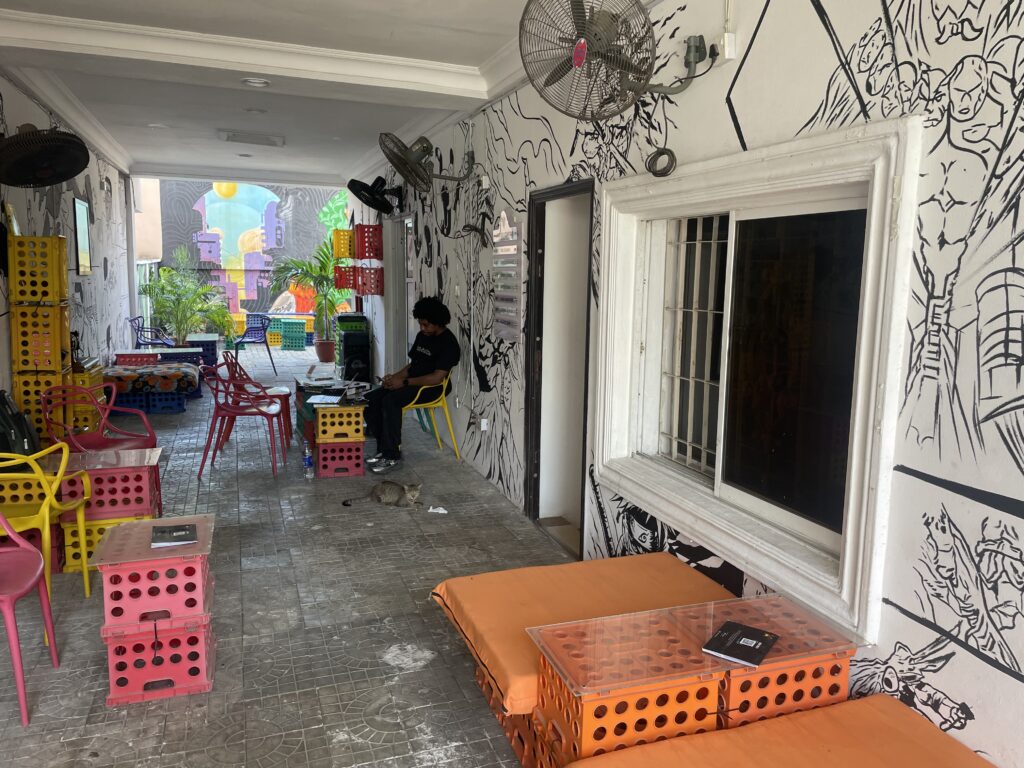
Seen from this perspective, the closure of the hub is less about withdrawal and more about reconfiguration. The model is shifting from a single, centralised space to a distributed ecosystem that integrates content, platforms, community, and experience into a more cohesive whole. “The space was never the end goal,” Somto says. “It was a test.”
Within this emerging model, comics are no longer confined to pages; they extend into culture and lifestyle. A bookstore becomes part of a larger system of discovery, a hub becomes a testing ground, and the brand itself begins to operate across multiple touchpoints, combining media, physical experience, and technology.
What replaces the hub, therefore, is not an absence, but a different kind of structure built on systems rather than spaces. The plan to develop tools, refine distribution channels, and position experiences closer to where audiences already are shifts focus from gathering people in one place to meeting them across many.
Yet even with these changes, one constraint remains constant: audience behaviour. “If people don’t buy, there is no industry,” Somto says plainly. An industry cannot sustain itself on attention alone. Participation must extend into support, purchasing, consistent engagement, and into the economic systems that allow creative work to continue. The responsibility does not rest solely on creators. It extends to the community that engages with the work and defines its relevance.
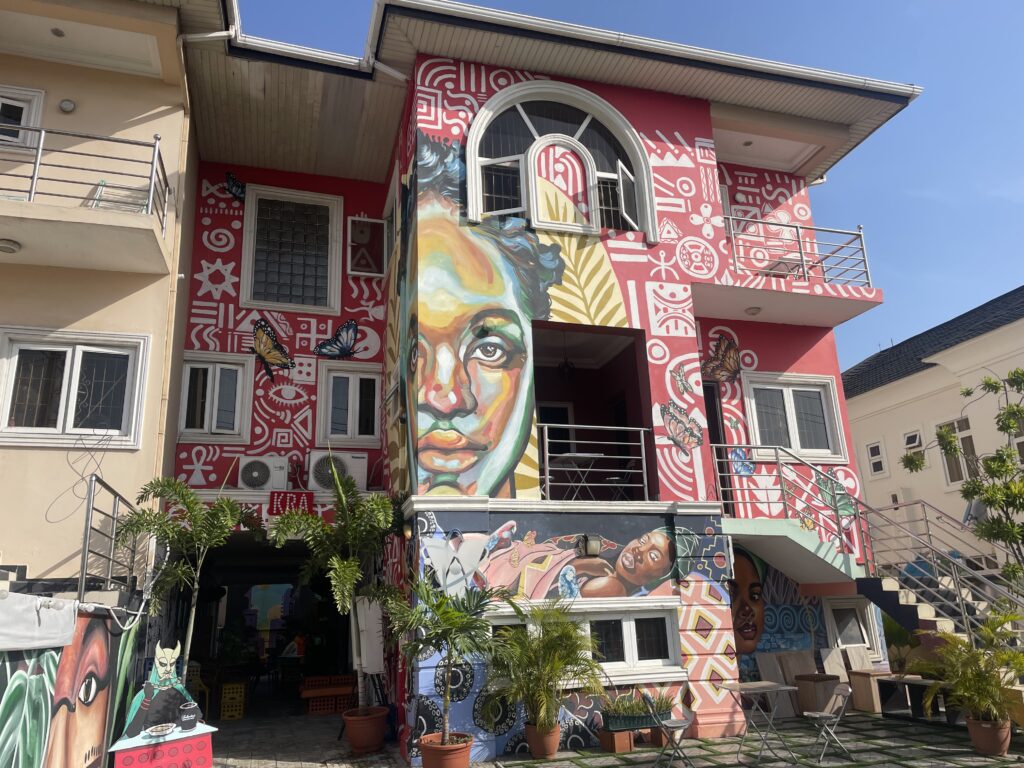
In this light, the closure of one of Lagos’ first creative geek hubs is not a signal of decline, but a moment of recalibration. It reflects a growing awareness that building an industry requires more than spaces, talent, and visibility. It requires systems that are intentionally designed, rigorously tested, and continuously adapted.
Ultimately, this recalibration is about doubling down on what Somto calls Spirit Fiction, a genre Vortex created to tell raw, unapologetically African stories. By moving from a centralised building to a distributed system of tools and platforms, the aim is to ensure that African creativity is no longer a “cash crop” for foreign platforms, but a sustainable economic engine for the continent itself.
--------------------------------------------------------
--------------------------------------------------------
AI Use at TheACE
TheACE uses artificial intelligence tools to support research, drafting and analysis across Africa’s creative industries. All content is verified, edited and approved by our human editorial team to ensure accuracy, clarity and responsible storytelling. AI assists our work; it does not replace human judgment.