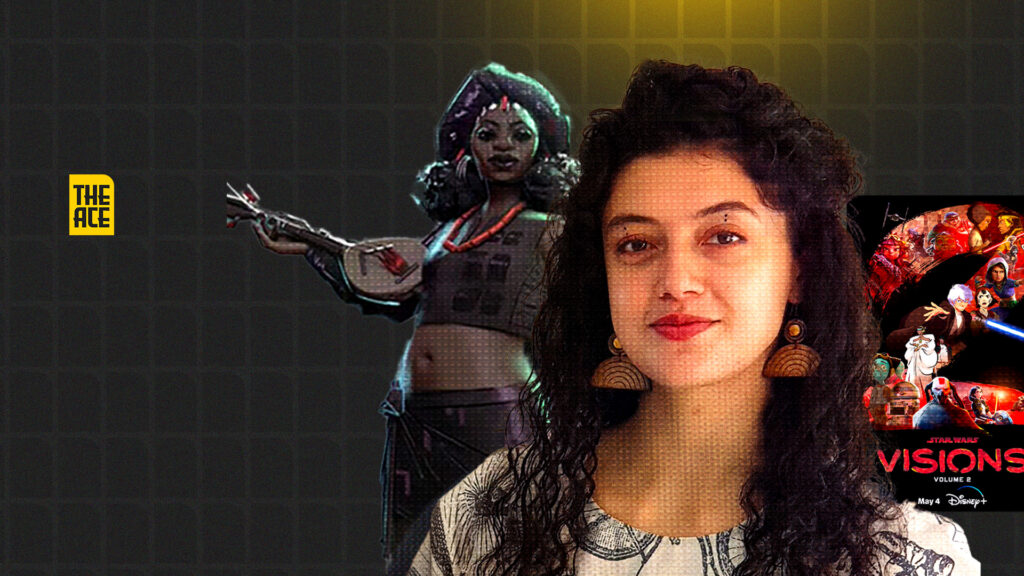
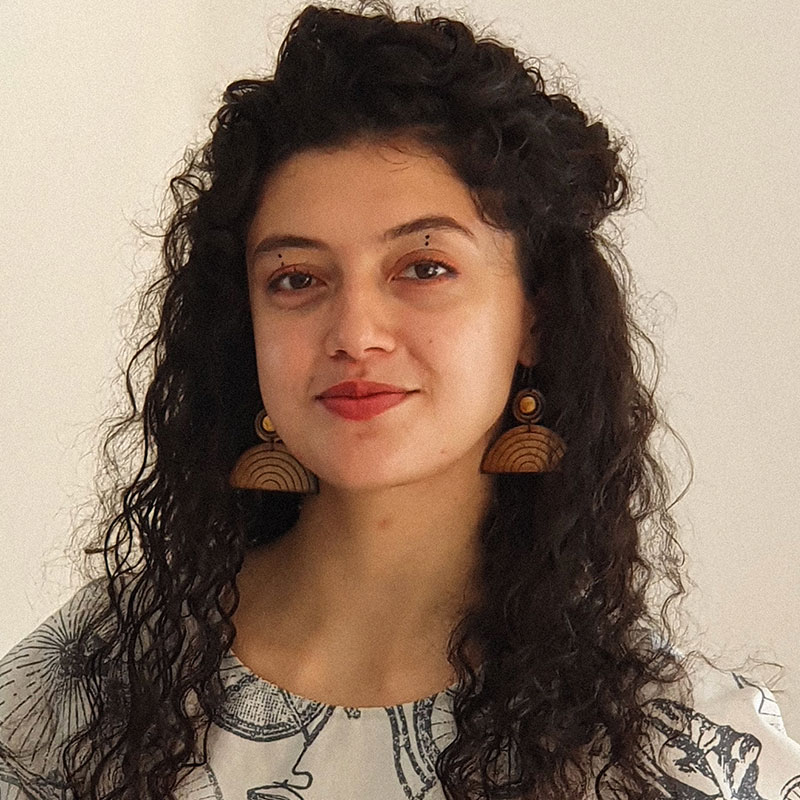
The rules that once governed global animation, how stories are financed, distributed, and ultimately seen, are no longer holding. Platforms that promised access now obscure visibility, audiences are fragmented across algorithms, and the pathways that defined success even a decade ago are quietly eroding. For African creators, this moment is both destabilising and generative: a collapse of old gatekeeping structures, but not yet the arrival of new, reliable ones. It is within this uncertainty that Nadia Darries operates, not as a fixed authority within the system, but as something more fluid. “I see myself as a bridge,” she says, positioning her work at the intersection of cultures, audiences, and an industry still in the process of redefining itself.
Darries’ sense of self is not incidental to her work; it is foundational to it. Based in Cape Town and shaped by a lineage that spans indigenous South African, Indonesian, and European roots, she occupies what she describes as a liminal space, one that resists easy categorisation. “I exist in a very liminal space… my identity is a coming together of many things… I’m very interested in bridging people, bridging cultures, because I exist in this space,” she explains. It is a position that reflects a broader reality within African animation today: stories are no longer being told solely from within fixed cultural borders. They are increasingly negotiated across them. For Darries, this is not a constraint but a function. To bridge, in her framing, is not to dilute meaning, but to carry it across contexts without losing its core.

So, if creators like Darries are learning to navigate cultural translation, then they are doing so within systems that remain stubbornly opaque. The global platforms that now host African stories present an appearance of openness, but in practice operate through layers of visibility that few creators can meaningfully access. Within these ecosystems, exposure is not evenly distributed but algorithmically concentrated and often favours a narrow selection of titles while the majority recede into obscurity.
“You can get onto Netflix, but still not be seen,” she notes. “It’s like the same ten films that feature in each category… what about all the other hundreds of films that are on the platform? We don’t see them,” pointing to a reality that undermines the very notion of distribution as success.
In this new reality is a paradox: African stories are more globally accessible than ever before, yet remain structurally constrained in how they are surfaced, consumed, and ultimately valued. The implication is clear: access alone is not power. And as the rules governing visibility continue to shift, creators are left to navigate an industry where presence does not guarantee perception, and where being seen remains as contested as ever.
So, if visibility is governed by systems beyond the creator’s control, then the work itself becomes a site of negotiation. For African animators operating within a global pipeline, the question is no longer simply what stories to tell, but how to tell them in ways that travel without being stripped of their meaning. It is here that the tension between cultural specificity and global legibility becomes most pronounced, not as an abstract debate, but as a series of decisions embedded within the creative process.
Darries is also careful with the language of compromise. According to her, the term suggests a loss, a dilution of intent in order to satisfy external expectations. What she describes instead is something more deliberate. “Compromise is one word,” she says, before reframing it. “But what you’re trying to do is create a bridge… you’re trying to bridge your story to people across the globe.”
In practice, this means constructing entry points into culturally specific worlds without flattening them into something universally palatable. It is a process that requires both precision and restraint, knowing when to hold firm and when to guide an unfamiliar audience through the work.
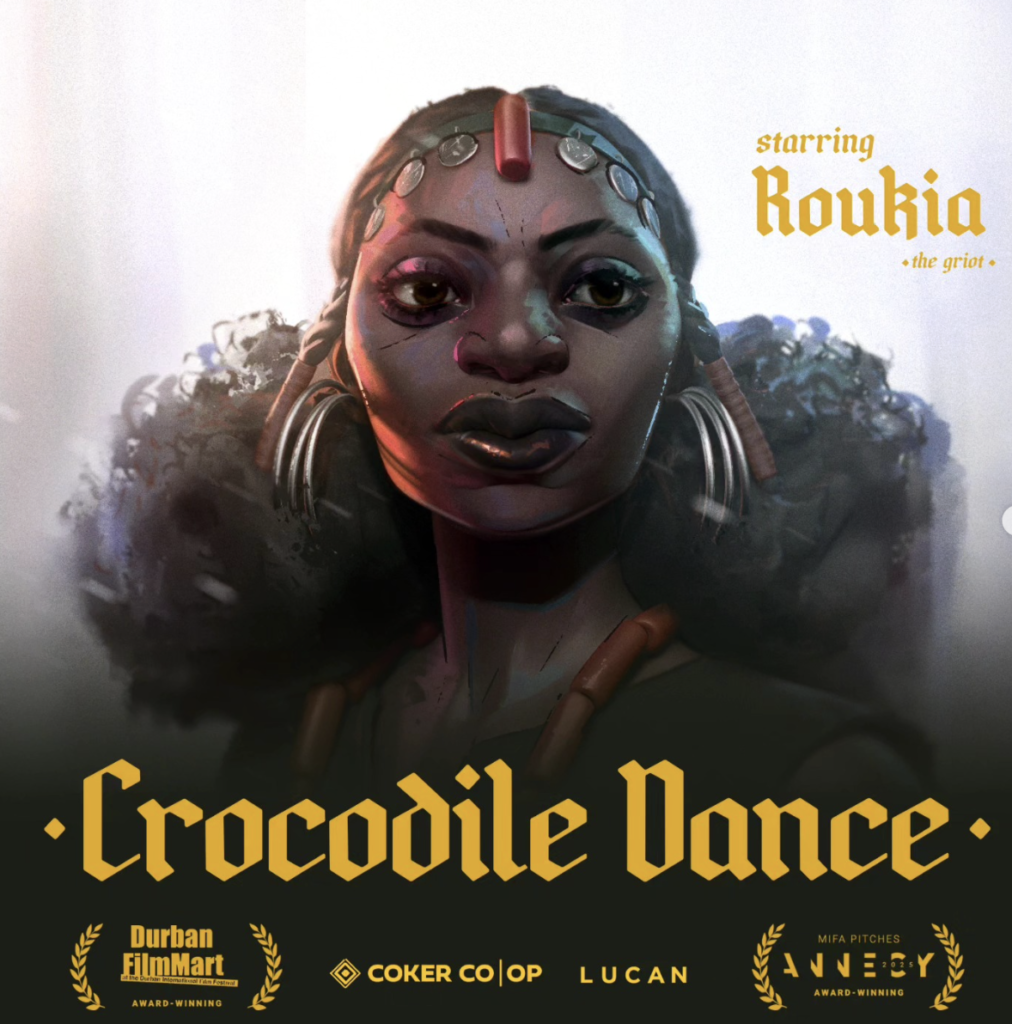
This balancing act is visible in the development of Crocodile Dance, a feature project currently in progress. Conceived by Nigerian creator Shofela Coker and developed in collaboration with Darries, the film sits at the intersection of multiple geographies and perspectives. At its core is a culturally grounded narrative, but with unmistakably global ambitions. Within the story, for instance, one of the characters speaks Hausa, a decision that foregrounds linguistic authenticity while simultaneously raising questions about accessibility for non-West African audiences.
“There are certain parts of the project where we’re very culturally specific,” Darries explains. “But we also need to create the right kind of bridges so that people who are not from the culture… have access to what’s happening.” The objective is not simplification, but orientation that offers just enough guidance for the audience to enter the world without restructuring that world around them.
Even at the level of representation, these decisions resist easy resolution. In a separate project focused on women entrepreneurs in sub-Saharan Africa, Darries recounts internal debates around whether to depict characters with children, which is an accurate reflection of demographic realities but one that risks reinforcing familiar stereotypes. “Sub-Saharan Africa has the highest fertility rates in the world,” she notes. “So, what do we do? Do we not represent those women?” The question lingers not as a rhetorical device, but as an ongoing negotiation between truth and perception.
If these tensions shape the creative process, they are compounded by the structural realities of production itself. Crocodile Dance, like many independent African projects, exists within a fragile ecosystem of funding, prototyping, and partnership. Early visual tests are often self-funded, assembled with limited resources to demonstrate potential to investors. “There’s a difference between a test and an actual piece of art,” Darries says, drawing a line between proof-of-concept and final execution. The distinction is critical, yet often invisible to audiences encountering the work in its early form.
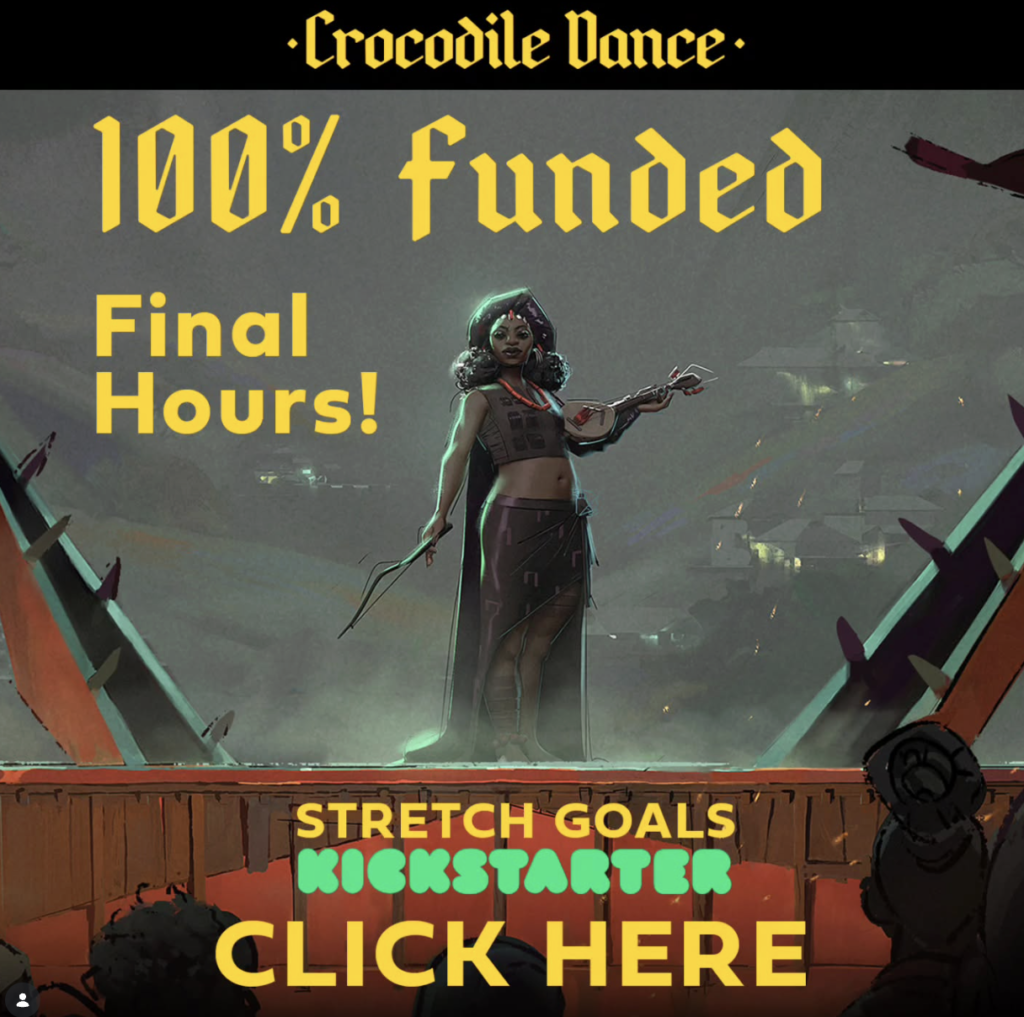
Beyond funding, questions of ownership introduce another layer of complexity. In the process of securing co-production deals, creators may be required to relinquish degrees of control over their own intellectual property, sometimes to the extent that future expansions of the story become uncertain. “We could lose enough ownership… that we won’t be able to make the feature film,” she admits. It is a precarious position: the very partnerships that enable a project’s existence can also limit its long-term autonomy.
If the creative process demands negotiation, then the structure within which that work is produced raises a more uncomfortable question: who ultimately holds power? Across the continent, the language of collaboration is often used to describe the growing network of cross-border projects, co-productions, and talent exchanges shaping African animation. Yet beneath this language lies a more uneven reality.
“I assume it’s probably the second,” Darries says when asked whether such collaborations genuinely redistribute power or simply replicate existing hierarchies. “It’s not that they are sharing authorship or ownership cross-border… It’s a hiring system.” In many cases, a studio develops an intellectual property and then draws talent from across the continent to execute it. The exchange is valuable, artists are paid, exposure increases, networks expand, but the underlying structure remains intact. Ownership, and therefore long-term leverage, remains concentrated.
This distinction matters. Without mechanisms for shared authorship, the idea of a unified African animation ecosystem risks becoming symbolic rather than structural. The continent may be producing together, but it is not yet building together in a way that redistributes control. For Darries, this is less an indictment than a reflection of where the industry currently stands; still early, still forming, and still negotiating the terms of its own expansion.
If power remains concentrated, then the question of sustainability shifts elsewhere. Much of the industry discourse continues to centre on infrastructure: funding pipelines, studio capacity, training systems, and policy support. These are not insignificant concerns, but Darries is clear about where the real challenge lies. “Sustainability… truly, that is all about building an audience,” she says. “What we need is an internal audience.”
It is a position that reframes the challenge entirely. In this sense, infrastructure is reactive; it follows demand rather than creating it. Without a consistent, engaged base of viewers invested in African stories, even the most well-funded systems struggle to sustain themselves. The success of industries such as Japan’s animation sector is not solely a function of production capability, but of a deeply rooted culture of local consumption. The implication for Africa is clear: until there is a deliberate effort to cultivate audiences within the continent, growth will remain externally dependent and structurally fragile.
Without a consistent, engaged base of viewers invested in African stories, even the most well-developed systems struggle to sustain themselves. The implication is not simply economic; it is cultural. This concern extends beyond economics into something more existential. “The thing that worries me most is that young people see themselves through the lens of outsiders,” Darries reflects.
The consequences of this distortion are not always immediately visible. They accumulate over time, shaping perception in ways that can feel natural, even inevitable. Darries recalls how, for some, places like Timbuktu were reduced to punchlines rather than recognised for their historical significance, an example of how narrative framing can overwrite cultural memory.
“Art shapes how you view your identity, your history, your people. We were just talking about this yesterday, how for some people growing up, Timbuktu was almost like a joke, like it’s a bad place you don’t want to go. But actually, the history of Timbuktu is incredible. It’s immense. And it’s like the coloniser has won with that term in certain communities.”
In this context, the stakes of African storytelling extend far beyond industry success. They become a question of how a generation comes to understand itself. It also shows that in an era where digital platforms mediate much of cultural exposure, the stories that dominate are not always those that reflect lived realities. And yet, for all its uncertainties, this moment is not without possibility.
The collapse of established systems, while disruptive, also removes the rigidity that once defined entry into the industry. “The way that things have been over the last 20 years is no longer the way things are,” Darries says. Traditional pathways, such as festivals, markets, and institutional gatekeepers, are no longer the sole arbiters of success. In their place is a more volatile, but potentially more open, landscape.
“It just means that people now don’t have the old keys,” she adds. “They can come in with their new keys and build their own doors.” The statement carries both caution and optimism. There are no guarantees in this emerging system, no established routes to follow. But there is, perhaps for the first time, a recalibration of who gets to define the rules.
For creators like Darries, operating at the intersection of cultures and industries, that uncertainty is not something to be resolved, but something to be worked through. To bridge, in this context, is not simply to connect two fixed points, but to move within a landscape that is still taking shape and carrying meaning across it, even as the ground continues to shift.
--------------------------------------------------------
--------------------------------------------------------
AI Use at TheACE
TheACE uses artificial intelligence tools to support research, drafting and analysis across Africa’s creative industries. All content is verified, edited and approved by our human editorial team to ensure accuracy, clarity and responsible storytelling. AI assists our work; it does not replace human judgment.